Keynote Speakers
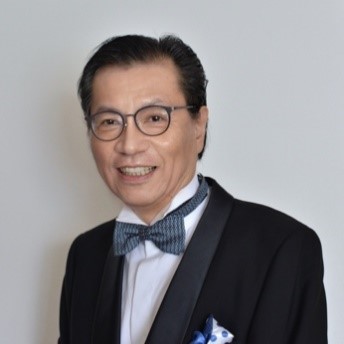
Prof. Hisato KOBAYASHI (IEEE Life Fellow), Emeritus Professor in Hosei University, Japan
Biography:
Hisato Kobayashi got B.S., M.S., and D.E. degrees from
Waseda University in 1974,1976 and 1979, respectively. He
joined Hosei University in 1984. He is now a Professor
Emeritus Hosei University. From 2001 to 2002, he was the
founding president of Hosei University Research Institute,
California. He was the Founding Dean of the Faculty of
Engineering and Design from 2007 to 2008. He was a board
member of the Robotics Society Japan (RSJ) from 1994 to
1996.
He was a board member of The Society of Instrument and
Control Engineers (SICE) from 2002 to 2004 and the vice
president from 2018 to 2020. He was editor-in-chief of
Advanced Robotics, Journal of RSJ, from 1997 to 2002.
From 2003 to 2005, he was the chairman of the automatic
control committee, Science Council Japan, and a member of
Science Council Japan from 2006 to 2014. From 2010 to 2013,
he was a Program Officer at the Japan Society for the
Promotion of Science. Since 2008, he has been the chairman
of the Standing Steering Committee IEEE International
Conference on Robot and Human Interactive Communication.
He is an IEEE Life Fellow
Speech Title: Coexistence of Humans and “Physical AI”
Speech Abstract: Recently, the term “Physical AI” has been gaining attention. When people hear “Physical AI,” many might imagine humanoid robots, but Physical AI is not limited to humanoid robots. Physical AI should be understood as AI that can not only provide information but also perform some form of physical action. So, what is the difference between conventional automation equipment (such as industrial robots) and Physical AI?With conventional automation equipment, humans have designed and implemented operations based on the laws of physics. All operations were designed from a human perspective, and every action was conceived within the framework of human behavior and perspective. In contrast, Physical AI allows the AI to perform physical actions by adding hardware. What actions are permitted and which are considered desirable should be determined through dialogue with humans (designers). However, the possibility that the AI might perform actions not anticipated by humans (designers) cannot be ruled out. In this presentation, I will introduce the possibilities of Physical AI while also outlining its challenges and potential risks.

Prof. Sho YOKOTA, Toyo University, Japan
Biography:
Sho Yokota received a Ph.D. degree from Hosei University,
Tokyo, Japan, in 2006, and a Doctorate in Robotics (Docteur
en Robotique) from the Université de Versailles
Saint-Quentin-en-Yvelines, Versailles, France, in 2009. He
worked at Tokyo University of Technology, Japan, from 2006
to 2009 and at Setsunan University, Osaka, Japan, from 2009
to 2014. Since 2014, he has been with the Department of
Mechanical Engineering, Toyo University, Japan, where he is
currently a Professor.
His research interests include human-robot interaction,
human assistive systems, mechanical design, mobility
systems, robotics, and mechatronics. Prof. Yokota has
published more than 200 papers and authored four books. He
served as the General Chair of the IEEE 13th International
Conference on Human System Interaction (HSI 2020). He was
also the Chair of the Technical Committee on Human Factors
and a member of the Administrative Committee (AdCom) of the
IEEE Industrial Electronics Society in 2016 and 2017.
Currently, he serves as an Associate Editor of the ROBOMECH
Journal (Springer).
Speech Title: Designing Intuitiveness: Mobility, Robotics, and Human Interaction
Speech Abstract:
Modern robotic and mobility systems have achieved
significant advances in sensing, control, and automation.
However, the development of systems that people can operate
and understand intuitively remains an important challenge.
This keynote introduces our research activities in
human-centered robotics and human-machine interaction. The
talk presents a range of studies, including
body-motion-based interfaces, personal mobility systems,
assistive robotic technologies, and other robotic systems
designed to improve usability and interaction between humans
and machines. Through these examples, the keynote discusses
design approaches that take human characteristics into
account and aim to provide more natural and effective
interaction.
By reviewing these research efforts, the talk highlights the
importance of considering human users in the design of
robotic and mobility systems.

Prof. Maria Pia Fanti (IEEE Fellow), Polytechnic University of Bari, Italy
Biography: Maria Pia Fanti (IEEE Fellow and Fellow of the Asia-Pacific AIA) received the Laurea degree in electronic engineering from the University of Pisa, Pisa, Italy, in 1983. She was a visiting researcher at the Rensselaer Polytechnic Institute of Troy, New York, in 1999. Since 1983, she has been with the Department of Electrical and Information Engineering of the Polytechnic of Bari, Italy, where she is currently a Full Professor of system and control engineering and Chair of the Laboratory of Automation and Control. Her research interests include modeling and control of complex systems, intelligent transportation systems, smart logistics; Petri nets; consensus protocols; fault detection. Prof. Fanti has published more than +310 papers and two textbooks on her research topics. She was senior editor of the IEEE Trans. on Automation Science and Engineering and member at large of the Board of Governors of the IEEE Systems, Man, and Cybernetics Society. Currently, she is Associate Editor of the IEEE Trans. on Systems, Man, and Cybernetics: Systems, member of the AdCom of the IEEE Robotics and Automaton Society, and chair of the Technical Committee on Automation in Logistics of the IEEE Robotics and Automation Society. Prof. Fanti was General Chair of the 2011 IEEE Conference on Automation Science and Engineering, the 2017 IEEE International Conference on Service Operations and Logistics, and Informatics and the 2019 Systems, Man, and Cybernetics Conference.
Speech Title: Artificial intelligence and digital twin approaches for Last Mile Delivery Management
Speech Abstract:Last-mile
delivery has long been a significant challenge in urban
logistics, being the last leg of the package's journey from
the distribution center to the final addressee. Issues
related to the increasing environmental impact, inefficiency
of traditional delivery methods, and traffic congestion have
highlighted the urgent need for more efficient and
sustainable solutions.
This talk presents some recent strategies to solve the
last-mile delivery problem based on Digital Twin tools and
autonomous robots. An optimization layer determines the
optimal routes of the robots, and a simulation model deals
in real time with system unpredictable events, such as road
traffic and accidents. Some case studies are presented for
validating the proposed approaches.